
Trigonometric functions: reciprocals and inverses
Cosecant, secant and cotangent are the reciprocals of sine, cosine and tangent. Arcsine, arccosine and arctangent are their inverses, with restricted domains.
After writing about sine and cosine and the tangent of an angle, I still have a few things to tell you about trigonometric functions.
Not many, but I need them to finish this short trip through trigonometry, needed to tackle the much longer one through survey measurement.
In this article I’ll talk about the reciprocals and the inverses of the trigonometric functions.
The reciprocals of sine, cosine and tangent
I don’t want to make enemies, but there isn’t much to say about the reciprocal of something…
It’s “1 divided by that something”.
In trigonometry the reciprocals of the functions must have charmed someone among those who “wrote the rules”, because they gave them proper names.
The reciprocal of a function is the function you get by dividing 1 by the function you want the reciprocal of.
It sounds like a tongue-twister, and it is a bit, so here it is clearly and briefly:
1/x is the reciprocal of x;
1/f(x) is the reciprocal function of f(x).
That’s all…
Oh no, in trigonometry there are also the names.
The reciprocal of the sine function is called the cosecant.
The reciprocal of the cosine function is called the secant.
The reciprocal of the tangent function is called the cotangent.
Personal note: if they had swapped the names of secant and cosecant there would be less confusion.
🙂
Anyway:
cscα = 1/sinα
secα = 1/cosα
cotα = 1/tanα
Since
tanα = sinα / cosα
then
cotα = cosα / sinα
but also
cotα = cscα / secα
There is one thing to say about the reciprocal functions, though: secant and cosecant don’t always exist.
Because sine and cosine can be 0.
The sine of 180°, for example, is 0.
So is the cosine of 90°.
For these angles, secant and cosecant behave just like the tangent of 90°.
1/0 → ∞
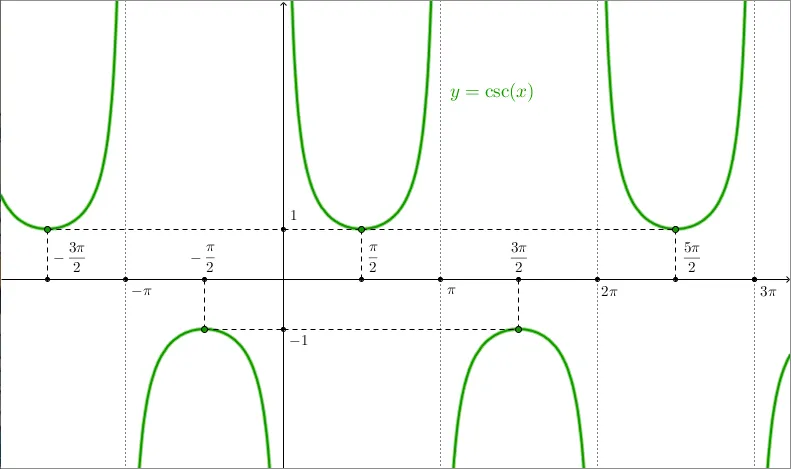
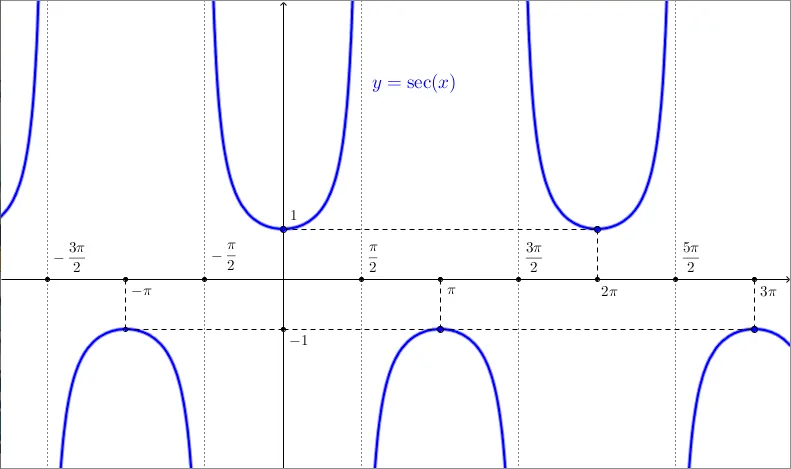
This means there is no finite value of secant and cosecant for these angles (0° and 180° for the cosecant, 90° and 270° for the secant, and the angles you get by adding 180° to them): they take an “infinite” value.
Like their parent functions, the reciprocals are periodic too.
Their values repeat with the same period as their “parents”: 360° for secant and cosecant and 180° for the cotangent.
There are graphs of the reciprocal functions, and in maths books you’ll find more, but I’ll stop here.
Inverse functions: arcsine, arccosine and arctangent
A trigonometric function tells you the value of the sine, cosine or tangent of an angle.
But there are also inverse functions, which tell you which angle has a given number as its sine, cosine or tangent.
For example, if I ask you which angle has a tangent of 1, the answer is 45°.
And which angle has a sine of 0.5?
30°.
To do this you applied the inverse of the two trigonometric functions.
Come on, those were easy cases.
But if I ask for the angle whose cosine is 0.729, things aren’t so immediate.
The inverse of the sine function is the arcsine, arcsin.
The inverse of the cosine is the arccosine, arccos.
And for the tangent there is the arctangent, arctan.
On calculators and computers you may find them written like this:
sin-1
cos-1
tan-1
You don’t need to drive yourself mad learning algorithms to calculate inverse functions: calculators and spreadsheets are there to help.
They take care of it!
But there is a problem with inverse functions.
And it is linked to the periodicity of the main trigonometric functions.
The problem with inverse functions
While each angle has only one sine, one cosine and one tangent, it is also true that different angles share the same sine, cosine and tangent (α+360°; α+720°, …)
So for every number (within the range of results of the trigonometric functions) there are several angles whose sine, cosine or tangent is exactly that number.
Infinitely many.
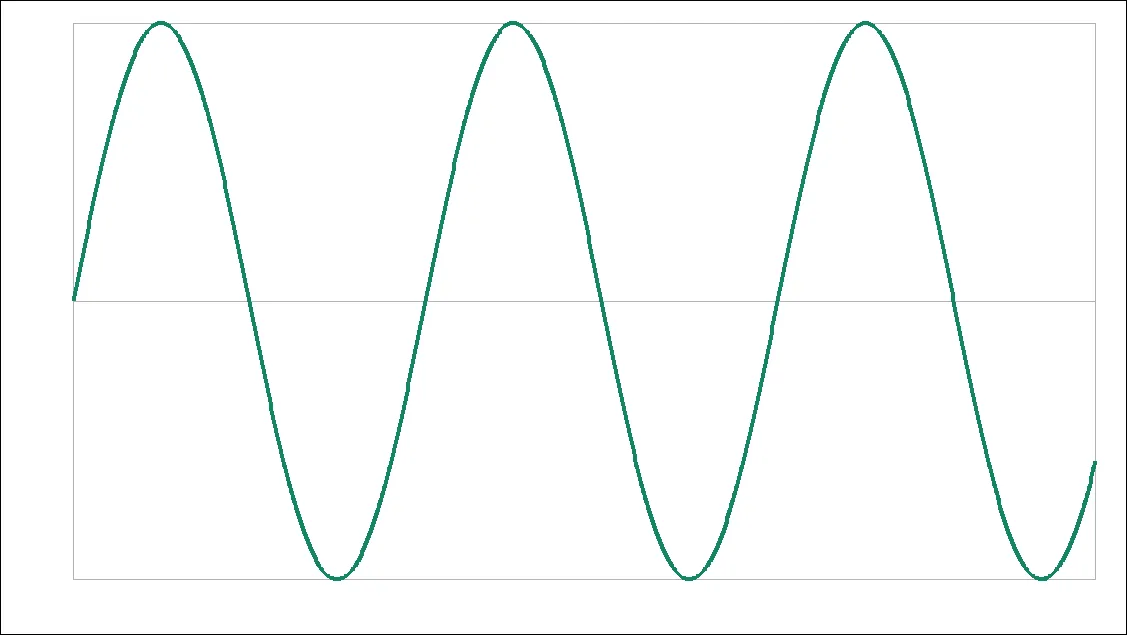
You can see it quite well in the graph of the sine function, which repeats every 360°.
If you draw a horizontal line crossing the sine wave, you’ll see it cuts it lots of times, finding as many angles.
Of these, only two lie within the first turn of the unit circle (that is, they are less than or equal to 360°).
This is a problem in mathematics and in surveying because it undermines the much-loved idea of uniquely determined, forcefully bringing back the ambiguity of angles.
So the solution is to restrict the range over which the inverse functions are valid.
The experts call it the “domain” (strictly speaking, here it is the range of output angles).
Here’s how.
Arcsine
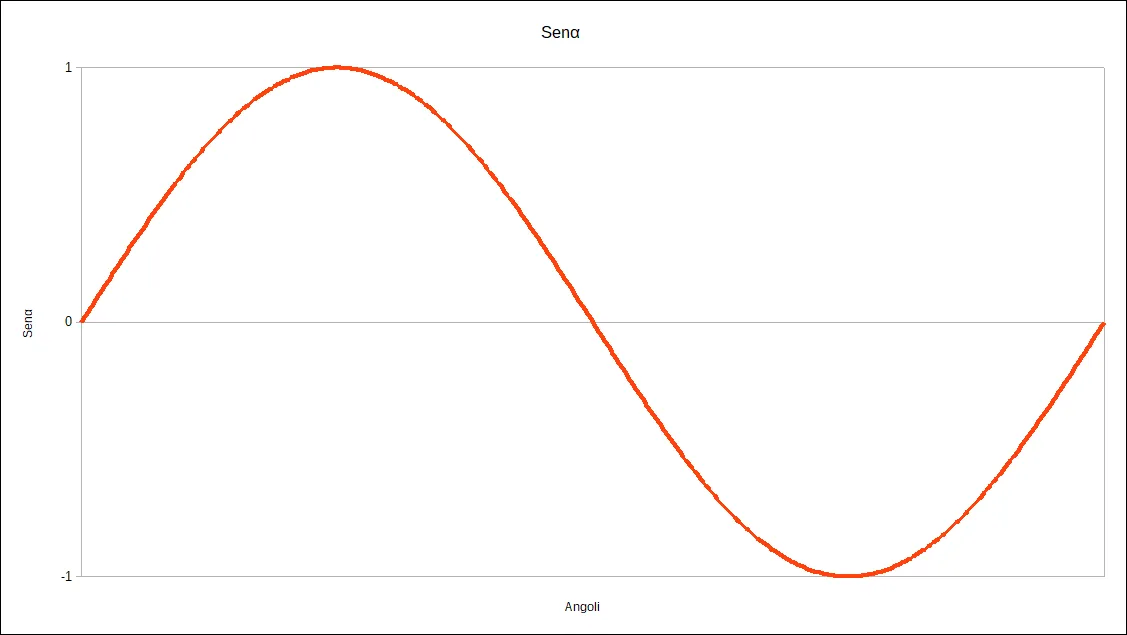
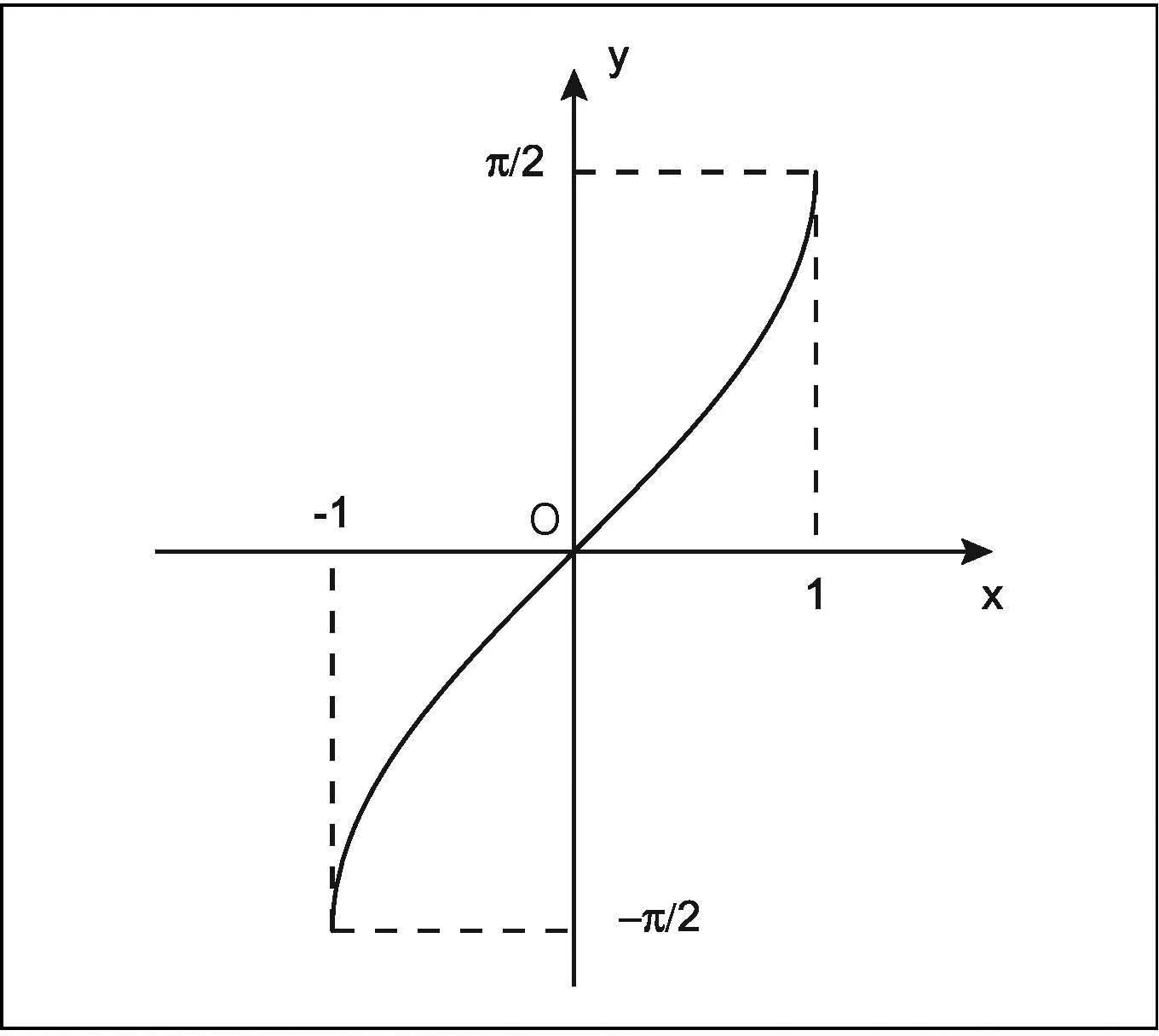
To remove the ambiguity of the inverse of the sine function, the arcsine, you take it as valid only for angles from -90° to 90°.
In this interval each number (between -1 and 1) corresponds to just one angle.
Here is the graph of the arcsine function.
Arccosine
For the arccosine, the inverse of the cosine, things are similar to the arcsine, but the range is different.
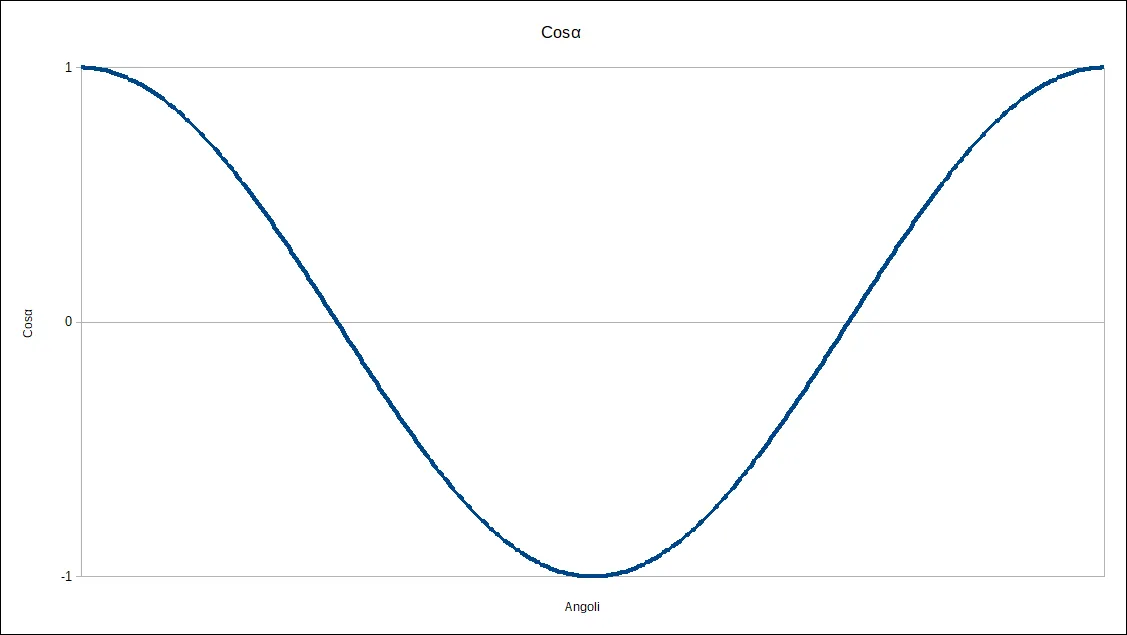
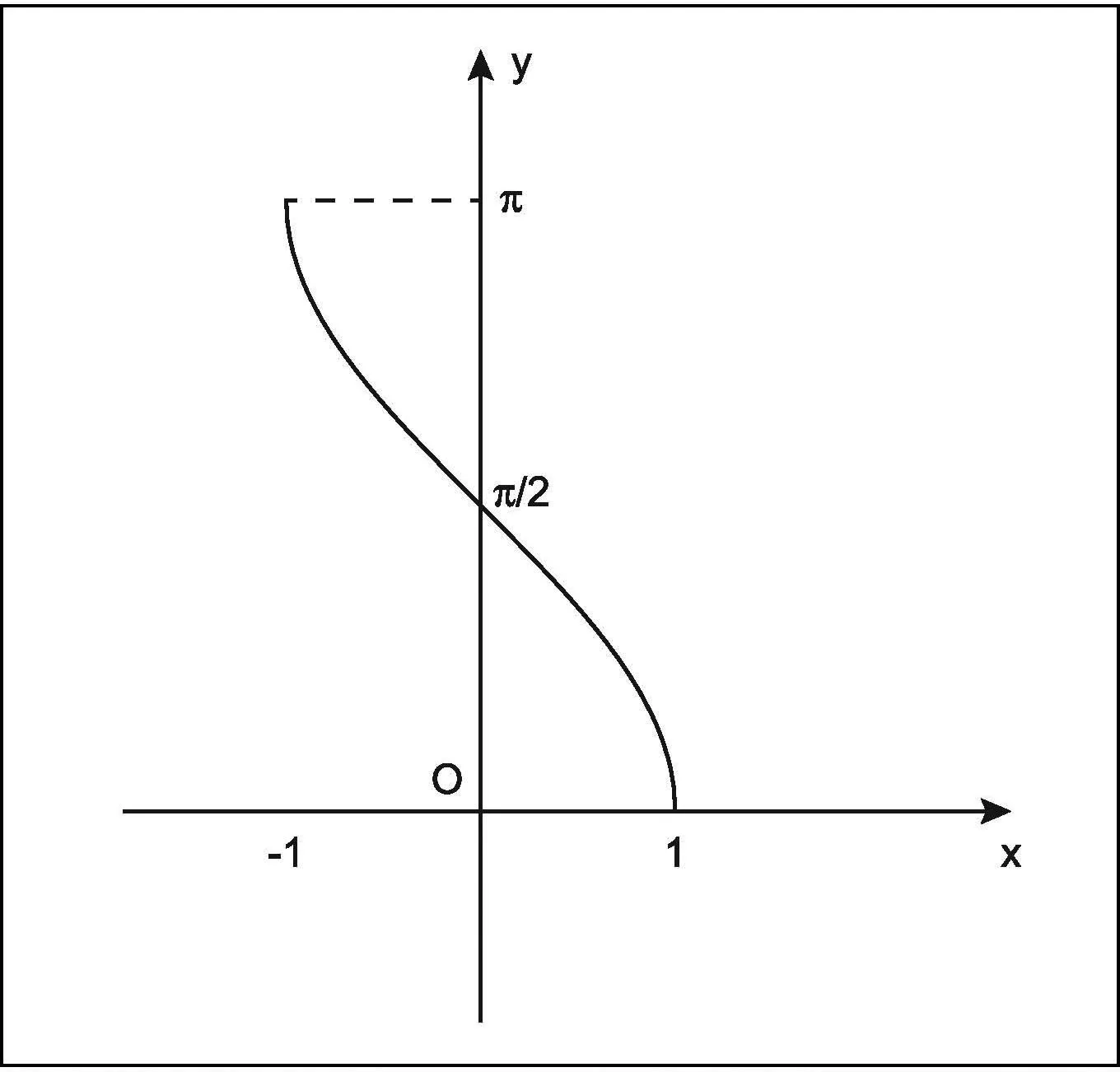
The arccosine is valid for angles between 0° and 180°.
Here is its graph:
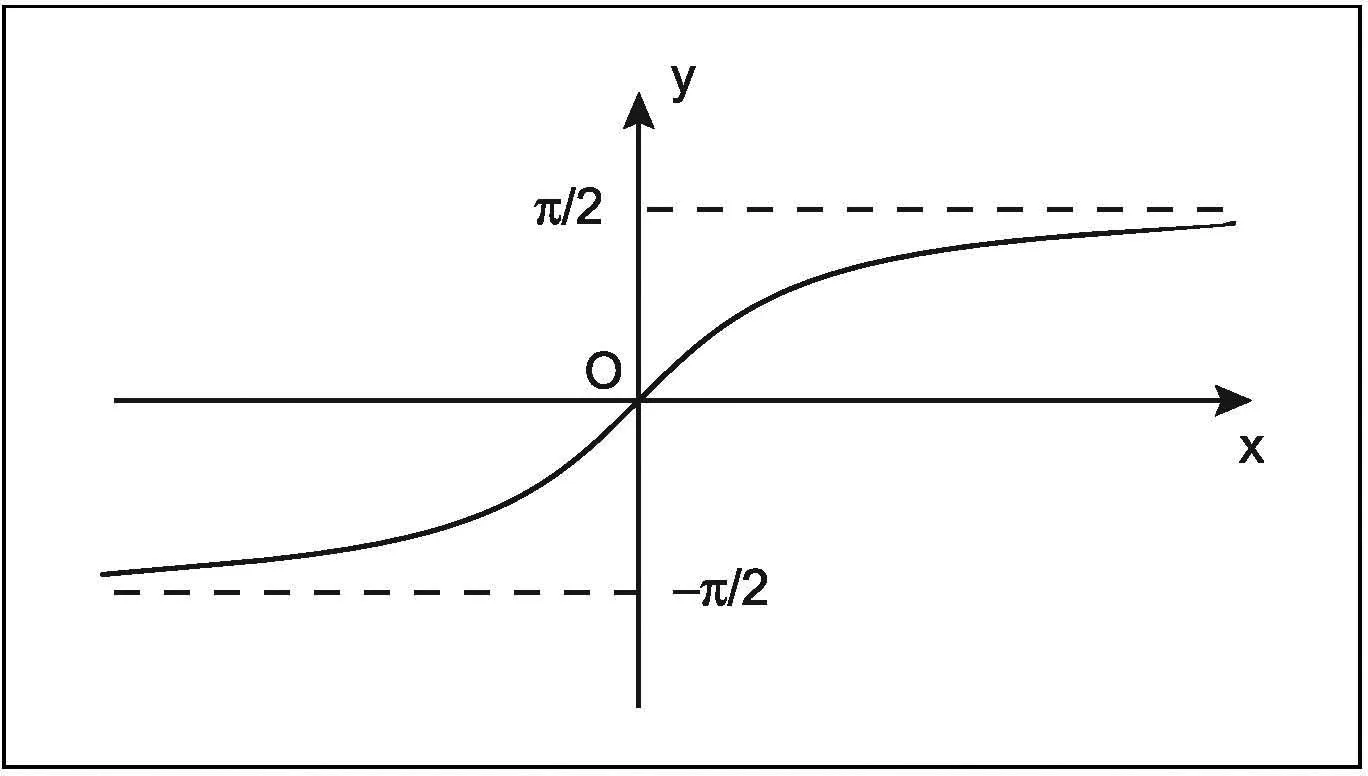
Arctangent
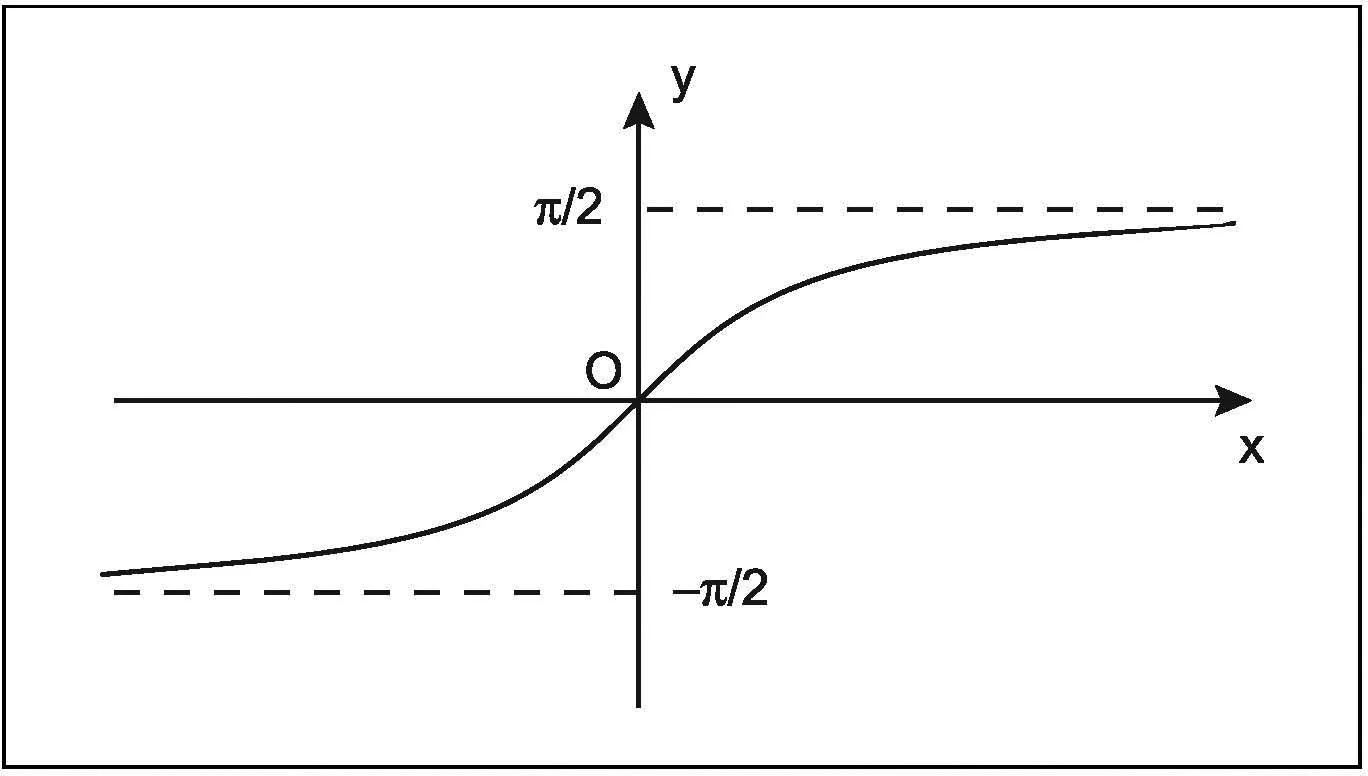
And finally there is the arctangent, the inverse of the tangent, which, like the arcsine, is valid between -90° and 90°.
INVERSE FUNCTIONS vs RECIPROCALS
There isn’t much more to say in this chapter, perhaps a bit grey in content.
I’ll close with a thought/recommendation.
There is a huge difference between the inverse function and the reciprocal of a function.
The reciprocal is 1 divided by the function, as with the reciprocal of a number in plain arithmetic.
The inverse function is a completely different story.
The notation doesn’t help: sin-1 means arcsine, not 1/sin.
Be careful not to confuse them!
🙂