What you need to know if you want to work with drones
How working with a drone worked in Italy in 2017, under the old ENAC rules: operators and pilots, critical and non-critical operations, rules of the air, insurance and 300-gram drones.
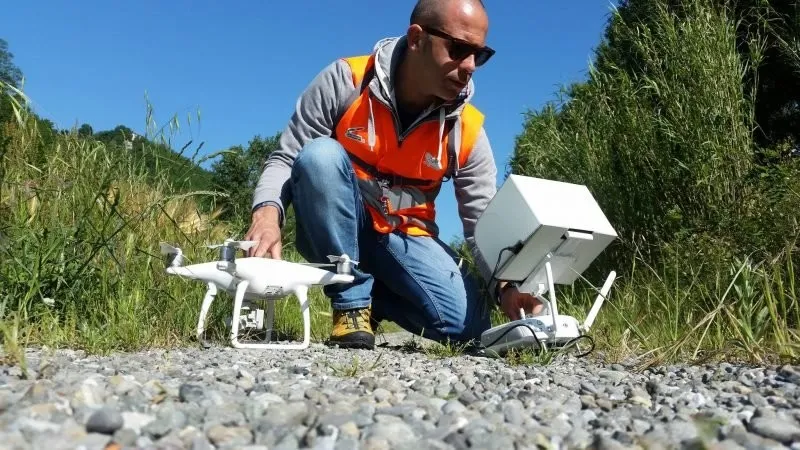
If you’re interested in working with a drone but don’t know how things work in Italy, I’ll try to explain it in simple words in this article.
Some time ago I had the honour and pleasure of being invited by Giulio Gaudiano onto an episode of his podcast, Strategia Digitale, to talk about the DJI Spark drone.
With Giulio we covered the technical aspects of the Spark along with some regulatory questions, in a half-hour chat (in Italian).
After this great experience I thought that the world of flying machines is fascinating but still a bit obscure, especially when it comes to the rules and prohibitions if you want to work with a drone.
So I’m writing this article for anyone curious about drones who doesn’t know the laws behind them but would like to know a bit more about whether and how they can use them in their work.
I should say that on the web you’ll find hundreds of articles and thousands of lines on this subject.
Here I’m trying to be understandable, and to do that I have to keep things fairly simple.
Forgive any superficiality you may read, especially if you’re an experienced operator or pilot!
Dura lex sed lex
If your business is in Italy and you’re interested in drones, what you need to know is the “Remotely Piloted Aerial Vehicles Regulation” of ENAC, the Ente Nazionale per l’Aviazione Civile, Italy’s civil aviation authority.
As I write these lines, Edition No. 2 of July 2015 is in force, updated by Amendment No. 3 of March 2017.
Perhaps by the time you read them a new update will have been issued.
Do you work or play with your drone?
If you work with your drone, you should call it an RPAS (Remotely Piloted Aircraft System).
If you have fun with your drone, then you have a model aircraft.
But don’t worry, you’re still flying a drone or, as they say in English, a UAV (Unmanned Aerial Vehicle).
It’s just a regulatory distinction; I keep calling them drones…
What does working with a drone mean?
The distinction between an RPAS and a model aircraft isn’t trivial.
And a few things depend on it, as you’ll read later.
What do you do with a drone?
Do you work with it or have fun with it?
Here are some examples to show you how fine the line is:
- Do you want to do aerial photogrammetric surveys for an engineering firm? You’re working with the drone.
- Do you want to inspect structures for a building manager? You’re working with the drone.
- Do you want to take photos at a wedding or make a commercial video for a farm? You’re working with the drone.
OK, so far it’s been fairly easy, because these are cases where you provide a paid service commissioned by someone else.
Let’s go on:
- Do you want to sell an image you took with the drone (and the rights to use it) to someone who’ll use it as the cover of their Facebook page? You’re working with the drone.
- And what if you took that image while you were having fun on your own? You’re still working with the drone.
It may also happen that flying the drone isn’t directly paid as a service:
- Are you a designer who wants to use the drone for a view from above to better understand an area you’re designing for? You’re working with the drone.
- Are you a site supervisor who wants to use the drone to keep an eye on the progress of the works from above? You’re working with the drone.
- Do you run a beach establishment and want aerial photos to optimise the layout of the umbrellas on the beach? You’re working with the drone.
And finally:
- Do you want to fly the drone for fun (yours and your friends’) and take photos that will stay in your digital archive or go on your personal Facebook or Instagram profile? You’re not working with the drone.
I hope I haven’t written anything wrong.
If you’re an expert in the legal side, correct my mistakes and I’ll update the article.
I’ll be grateful!
As you can see, the line between working with a drone and using it for recreation isn’t clear-cut.
If you work with the drone, and so you have an RPAS, you have to comply with a good many articles of the Regulation I mentioned earlier (from Section I to Section VI).
If instead you “play” with the drone, you have to follow a few specific articles (Section VII).
Do you need a licence?
People call it a drone licence, or a patent.
Formally it’s called the RPA Pilot Certificate.
If you have a drone and want to use it for work, do you need a pilot certificate?
Not always.
ENAC introduced the figure of the RPAS Operator.
Operator and pilot are two different things, and I’ll explain with a practical example.
Alitalia was a transport company with a fleet of aircraft and its employees, including pilots.
Sticking to flight activities, Alitalia bought the aircraft, certified and registered them, carried out periodic checks and maintenance, issued and applied safety procedures, in the air and on the ground…
The pilots flew Alitalia’s aircraft, and to do so they had to have specific qualifications and experience according to the routes they flew (domestic, continental, intercontinental), the aircraft they piloted (747, 767, Airbus, …) and even some of the airports they landed at or took off from.
Back to a few lines ago: Alitalia was the operator, and the pilots, with specific training and qualifications, were, of course, the pilots.
If you own a business interested in using drones, you could buy one, register it with ENAC, and then have it flown by someone qualified to do so.
An employee, a collaborator or an outside provider.
And in that case you, the business owner, don’t need the licence!
Are you a farm that wants to use a drone fitted with special sensors (thermal and/or multispectral cameras) to analyse vegetation and crops?
You buy it, register it with ENAC and, when the time comes, rely on a qualified pilot to fly it.
Responsibility for maintaining the drone, the design certificates, the operations manuals and the third-party liability insurance lies with the operator.
Responsibility for what happens in flight lies with the pilot.
If operator and pilot are the same person
A fairly common case in Italy is that pilot and operator are the same person.
That’s my case: a freelance professional who works with drones to do aerial photogrammetric surveys in areas of hydrogeological instability.
I’m both operator and pilot.
The drones in my fleet are registered in my name with ENAC, the insurance policies are in my name, I sign the invoices to my clients for the services I provide, and I’m the pilot during flight operations.
Everything collapses into a single person, as they say…
Let’s hope I hold up!
🙂
How to become an RPA pilot
If you wanted to become an RPA (Remotely Piloted Aircraft) pilot, a drone pilot, you had to:
- find an ENAC-recognised school running courses for the certificate (I took my courses at the Zefiro Ricerca & Innovazione flight school, based at Tassignano-Capannori airport, near Lucca);
- attend the theory course (a couple of days) covering aviation law, meteorology, air traffic and drone use;
- have a specialist medical examination of LAPL class with an Aero-Medical Examiner (I did mine in Pisa);
- take and pass a theory exam;
- attend practical training in the field (another couple of days), where you learn to fly a drone under the supervision and guidance of a qualified instructor;
- take and pass a practical flying exam.
How much does a pilot certificate cost?
There’s no list price or reference tariff for getting a drone pilot certificate.
Each school is different.
Very broadly, to do what I’ve described above you could spend between 1,000 and 1,600 euros.
Do I have to renew my pilot certificate?
Yes, the pilot certificate lasts five years, after which it has to be renewed.
The LAPL medical certificate is also valid for 5 years, but only up to the age of 40. After that, it has to be renewed every two years.
BUT DO YOU NEED A COURSE TO BE ABLE TO FLY A DRONE?
I’ll answer this in bite-sized pieces:
- To work with a drone under the Italian rules in force, YES, you do.
- To fly a consumer drone (a Phantom, a Mavic, a Parrot) in an open area away from trees, power lines, roads and people, NO, you don’t. I have a nine-year-old daughter who can fly a Phantom and a Spark without any problems.
- To know where you’re allowed to fly your drone, YES, you do.
- To know the principles by which a machine flies, YES, you do (unless you’re a mechanical/aeronautical/aerospace engineer).
- To handle an emergency in flight (a failure, loss of radio contact), SORT OF. It’s needed, but if you’re good at digging around online you’ll find plenty of information on your specific drone just by googling.
I’m a licensed pilot. Can I fly wherever I want?
The answer to this question is as simple as it is blunt: NO.
To explain why, though, I’ll need a few lines…
Non-critical and critical operations
Non-critical operations
Article 9 of the ENAC Regulation tells you what non-critical specialised operations are.
They’re drone activities within the pilot’s visual line of sight (you have to see it from the ground while it flies) that don’t involve flying over congested areas, crowds of people, urban areas or sensitive infrastructure.
And this applies even in the event of failures and loss of control of the drone.
What are congested areas?
Residential, industrial, commercial and sports areas, and in general areas where people may gather, even temporarily.
What is sensitive infrastructure?
Roads and motorways (open to traffic), railways, ports, prisons, military areas, …
Critical operations
Article 10, on the other hand, tells you that operations are critical when they don’t respect, even partly, the limits of non-critical operations.
Here are some rough examples:
- If you fly over a farm to do agricultural analyses, there’s nobody under the drone and you’re 500 m from the nearest road, you’re in a non-critical situation.
- If you’re surveying a quarry in the heart of the Carrara marble basin on a Sunday morning when no quarry workers are around, you’re in a non-critical situation.
- If you take aerial photos of an Alpine panorama from a summit, you’re in a non-critical situation.
- If you inspect a roof in town, you’re in a critical situation.
- If you’re flying to make an orthophoto of an area bordering a road, you’re in a critical area. If you stop the traffic for the whole duration of the flight and nobody else is around, you can move to a non-critical situation.
- If you inspect the lighting towers of a stadium, you’re in a critical situation.
- If you film a construction site in progress, with workers on site, you’re in a critical area.
How far from sensitive elements must I stay to remain in a non-critical scenario?
Article 27, paragraph 2 of the Regulation tells you that non-critical operations with aircraft weighing less than 25 kg must be conducted at least 150 m from congested areas and at least 50 m from people not involved in the operations and under the operator’s control.
Registration with ENAC and ENAC authorisation
To fly in non-critical scenarios you don’t need ENAC authorisation.
You have to self-declare as an operator to be entered, with your drone, in the relevant register.
But it isn’t enough to fill in a form and pay the registration and processing fees (around a hundred euros): you have to have prepared a number of manuals to keep and update.
Here are just a few: flight manual, operations manual, operations log, results of experimental tests, …
Who writes them for you?
If you have the time, will and resources you can do them yourself, but it isn’t trivial. I did mine with the help of a friend who’s an aeronautical engineer.
Otherwise you rely on consultancy firms that do it for you.
At what cost?
Here the price range is really wide. For very common consumer drones, the manuals are becoming standardised and prices are modest, around 200–400 euros.
For special drones, consultancy in this field can cost you even a thousand euros or so.
For drones made by Italian manufacturers, the manuals are usually included in the price of the machine.
To fly in critical scenarios, ENAC has to authorise you and you must have upgraded your pilot certificate.
The supplementary course to become a pilot for critical areas works like the one I’ve already described: theory course + theory exam + practical course + practical exam, for about another thousand euros (at least…) and 3–4 days.
To get ENAC authorisation you have to open an application, sending a request and further manuals: the ones you’ve already prepared for non-critical operations plus some additional ones.
ENAC’s offices examine the documents and authorise you to fly in critical areas (in reality it’s a bit more complex than that, because there are standard operating scenarios to follow, but I don’t want to confuse you too much).
Here too you’re listed in an online database.
In any case, you can never fly over crowds of people at marches, demonstrations, sporting events or concerts.
There’s some fog over the interpretation of flying over a crowd.
The number of people that makes up a crowd isn’t specified.
And just as well, because 100 people in a hectare of countryside aren’t the same as 30 people waiting at a bus stop.
Anyway, if you want to film the Rolling Stones concert in Lucca from above, leave the drone at home and hire a helicopter or a tethered balloon (when the Stones come back to Italy…).
The penalties in this case are heavy!
You even risk criminal charges.
OK, I’m still the licensed pilot from before. Can I fly any drone?
Unfortunately the answer is still NO.
An ENAC circular issued in June 2016, LIC-15 “Remotely piloted aircraft – Training centres and pilot certificates”, classifies drones by weight and type.
A drone has a class and a category.
There are three classes, distinguished by weight, which ENAC calls Operating Take-Off Mass (MOD in Italian).
VL – Very Light: drones weighing more than 300 grams and up to 4 kg;
L – Light: drones weighing more than 4 kg and up to 25 kg;
H – Heavy: drones weighing more than 25 kg (the ENAC regulation applied up to 150 kg).
And there are four categories depending on the type of drone: Ap (fixed-wing), Hc (helicopters), Mc (multicopters), As (airships).
When you take the practical course to become an RPA pilot, the school issues a certificate based on the aircraft you used in training and in the final exam.
I’m a pilot certified to fly Very Light multicopters, VL/Mc.
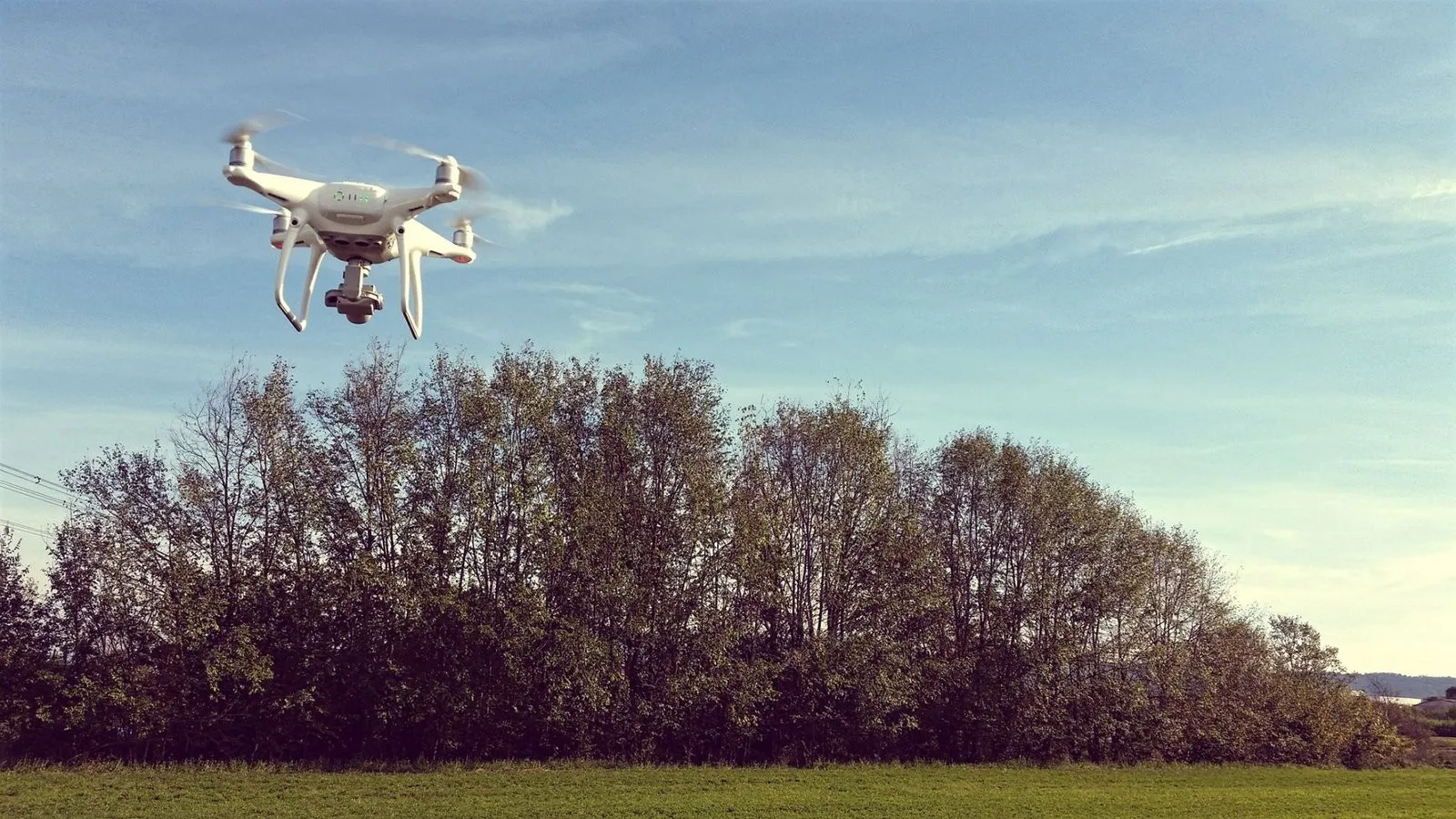
If your school has you do the practical course on a DJI Phantom 4 (a quadcopter weighing 1.4 kg), it qualifies you for class and category VL/Mc, and you can’t fly a senseFly eBee, which is a fixed-wing drone, nor another 8 kg multicopter.
Got it. I have the pilot certificate for critical operations too and a drone I can fly. Now can I do more or less what I want?
Third time lucky? No: the answer couldn’t be anything but NO again.
The rules of the air
Here the rules of the air come into play, which ENAC defined in its Regulation starting from the civil aviation air traffic rules already in force.
The rules, to be clear, that govern traffic to and from an airport, high-altitude civil aviation routes, etc.
From these, ENAC established the limits beyond which you can’t fly your drone.
If you thought you could get a Phantom 4 and send it on flight missions two kilometres away without seeing it, I’m sorry to tell you that you can’t.
It’s true that many drones on the market today have a really surprising range, but in Italy that’s of little use.
Here are the limits you had to respect when working with your drone:
Maximum flight height: 150 m AGL (Above Ground Level, meaning the distance of the drone’s landing gear from the ground below);
Maximum horizontal distance: 500 m from the control station (where you, the pilot, stand with the remote controller);
Flight conditions: VLOS (Visual Line of Sight), the pilot must always see the drone in flight (without binoculars).
If you were in a CTR (Control Zone), a controlled traffic zone around an airport, the limits dropped to 70 m and 200 m respectively, and in the areas under take-off and landing paths, up to 15 km from an airport, you couldn’t take the drone higher than 30 m above the ground.
What’s more (unless authorised as an exception to the regulation):
- you couldn’t fly inside an airport’s ATZ (Aerodrome Traffic Zone), or within 5 km of the airport if no ATZ had been formally established;
- you couldn’t fly in airspace prohibited by aviation rules (Restricted R and Prohibited P areas);
- you couldn’t fly inside nature parks and protected reserves.
How do I know where flying my drone is prohibited?
In 2017 you could register with the online service of ENAV (Italy’s air navigation service provider) and download the official PDFs of the aeronautical charts, or consult the digitised aeronautical maps on other portals (but the official source remained ENAV). Today in Italy the reference is the D-Flight portal.
Won’t you need insurance for the drone too?
And here, finally, I tell you YES!
You can’t work with a drone unless you have third-party liability insurance to compensate for any accidental damage caused by its use.
Until a few years ago it wasn’t easy to find a company that would insure your drone at a reasonable price.
Today, given the market and the interest, you can find good policies from brokers and companies covering your drone’s damage for between 200 and 500 euros a year, depending also on the drone’s type and weight.
300-gram drones
If, after reading everything I’ve written so far (and thank you so much for your time!), you’ve decided to drop the idea of working with a drone, or integrating it into your business, because there’s too much to do and it’s too costly, wait a moment.
Read these few more lines.
It might be interesting!
A harmless drone
In its guideline 2016/003-NAV, ENAC explained how to establish that a drone is harmless.
The question revolves around the drone’s kinetic energy at the moment of an unfortunate impact.
It deals with maximum speed, energy density (i.e. energy relative to the impact area), operating take-off mass and other physical questions, as well as qualitative and quantitative assessments I won’t bore you with.
In its general Regulation (Article 12), ENAC said that a drone weighing less than 2 kg can be used as if it were always flying in non-critical scenarios (even in town, in sensitive areas, etc.) as long as it is recognised as harmless.
Because of the calculations I mentioned, a DJI Phantom 4, even though it weighs 1.4 kg, can’t be considered harmless, because it flies at a top speed of 70 km/h and its kinetic energy (which is proportional to the square of the speed) would exceed the threshold for the harmlessness declaration.
That’s just one example, but it applies to other drones of the same size.
But if you reduce mass and top speed and shield the rotating parts from direct contact with sensitive parts of the body, a drone can be made harmless.
Why 300 grams?
In recent months there has been an explosion of new operators certified with ENAC with harmless 300-gram drones, now famous in Italy as “trecentini”.
The 300-gram weight isn’t a requirement for making a drone harmless.
Some manufacturers build heavier machines that have obtained harmlessness certification: multicopters with limited top speed, or fixed-wing drones (planes) in polystyrene with very well protected rotating parts.
However, a drone weighing less than 300 grams lets you fly it without either the RPA pilot certificate or the specialist medical certificate.
The first category of drone for which a pilot certificate is issued is in fact VL (Very Light), aircraft weighing more than 300 grams.
And here’s the magic formula that sparked the 300-gram craze:
Take a drone weighing 300 grams (or less), have it accepted and registered as harmless, and you can use it without a pilot certificate, without a medical certificate and always in non-critical scenarios.
But why have they all arrived now?
Yes, fine, but small, harmless drones have been around for a while, you can even find them in supermarkets. Why are they all arriving now?
Because for some months drone manufacturers have been putting on the market aircraft with electronics and on-board sensors sophisticated enough to be used for work.
I challenge you to work with a 70-euro drone that takes 3-megapixel photos with no GPS, compass or other flight aids…
Practically impossible!
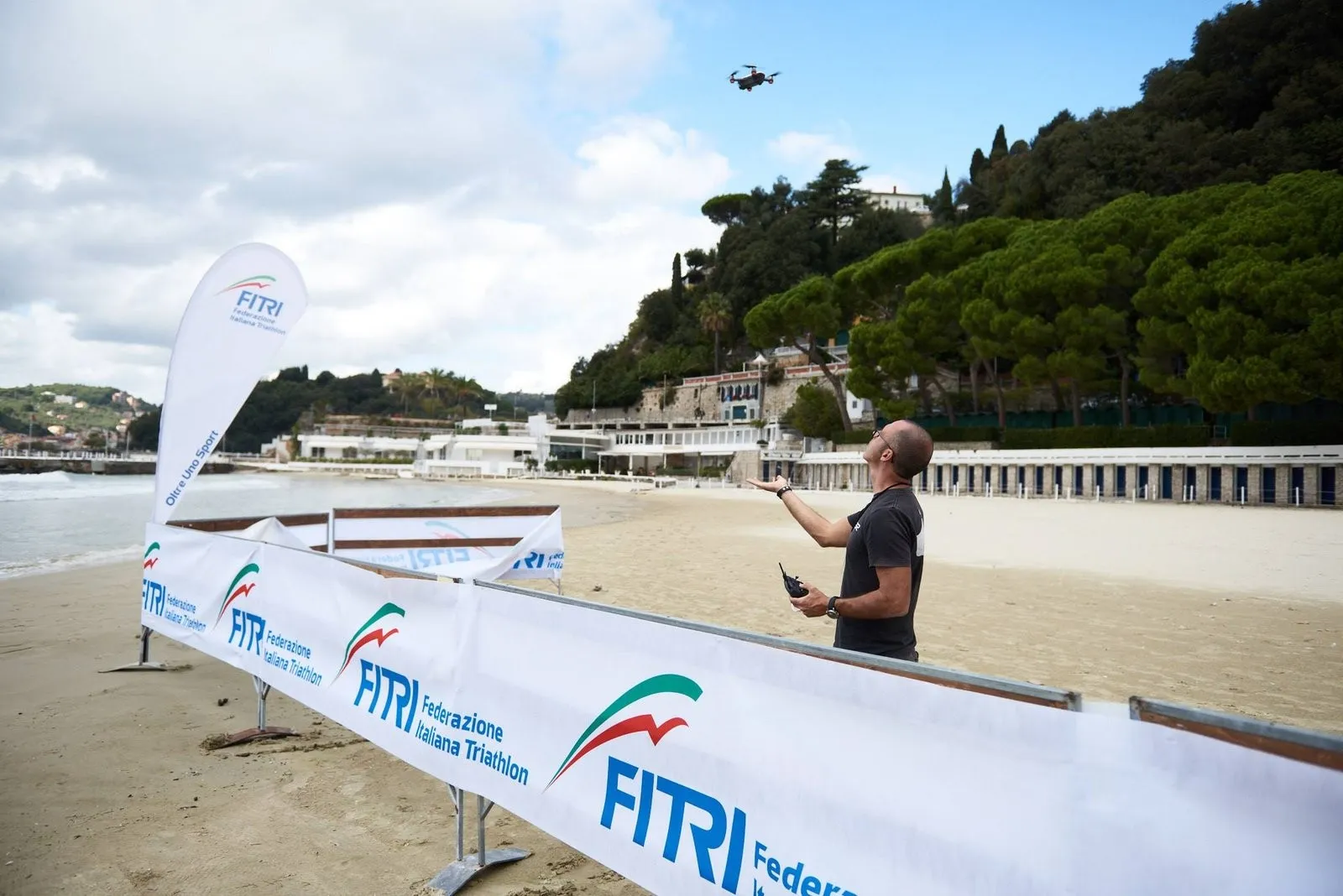
Among the drones that triggered the charge of the 300 are the DJI Spark, which I mentioned at the start of this article, and the Parrot Bebop.
But there are others, just as good, from other specialist manufacturers.
So now that I have a 300-gram drone, can I do whatever I want with it?
Unfortunately I have to say NO once more.
Here, point by point, is what you had to do after buying it:
- check that the drone’s mass with propeller guards doesn’t exceed 300 grams;
- if it does (the DJI Spark with its supplied propeller guards weighs 340 grams), you have to lighten it by replacing some parts with lighter ones;
- prepare some documents, including the Operations Log and the Flight Manual;
- send ENAC a declaration of responsibility and conformity of the aircraft for acceptance of its harmlessness;
- insure the drone with a third-party liability policy;
- wait to be entered in the register of operators for non-critical specialised operations before starting to work with the drone.
The same prohibitions and limits I wrote about earlier also apply to a harmless 300-gram drone: airports, protected areas, prohibited areas, ATZ, CTR, …
And you can’t fly over crowds.
How do I lighten it?
To lighten a small drone and get it under 300 grams, you’ll find consultants and consultancy firms online who, for 150–300 euros:
- sell you the kit to replace some of the drone’s parts yourself with 3D-printed pieces and prepare the manuals for the ENAC paperwork;
or
- work directly on the drone you send them and return it slimmed down and ready for registration.
I just want to have fun!
If you like drones but have decided you just want to have fun with them, you’re a model aircraft flyer, and your drone is a model aircraft!
Forget most of what I’ve written so far, but know that:
- you had to fly in unpopulated areas, away from buildings and infrastructure (how far? the regulation didn’t say, it only said sufficiently far);
- you could take the drone up to 70 metres and had to keep it within a maximum radius of 200 metres from the take-off point;
- you had to fly outside airport ATZs and CTRs, outside regulated areas and prohibited zones;
- insurance wasn’t compulsory, but insurers offered policies for model aircraft at much lower prices than for an RPAS.
You’ve reached the end!
Thanks for sticking with it this far.
We’re at the end of the article, and before saying goodbye I’ll leave you with some personal thoughts, again in bite-sized pieces:
- Drones are forcefully entering many professional sectors and our lives. We’ll hear about them more and more. Ignoring them would be like turning the other way and hoping these wasps disappear. I don’t think they will!
- Drones aren’t toys. Or rather, some are, but the ones we use for work aren’t. Even though they have really sophisticated and often redundant on-board electronics, they’re still objects you send into the air, and in the air there are other things too: from a high-voltage cable to other aircraft, civil and military. Care, caution and common sense should be made compulsory by law!
- After a period of confusion and darkness in which everyone did more or less what they wanted, Italian drone regulation took shape by borrowing the rules of the air that apply to all of aviation. You’ll understand that this doesn’t make much practical sense and clashed with applying the same laws to flying objects that don’t carry people, have no fuel on board, etc. That’s why ENAC kept refining and updating its regulations. I thought it would keep doing so, also in view of unified European rules. Who knows what will be in force when you read this article!
- Today (end of 2017) drone development (on-board electronics and sensors, batteries and materials, …) is moving at the speed of light! A bit like smartphones in recent years. I think manufacturers will compete above all in the under-300-gram field, to make ever more capable aircraft usable with all the advantages I’ve described.
Well, I hope I’ve given you useful information if you’re interested in working with a drone in Italy.
For any information or clarification, don’t hesitate to contact me: on Telegram, @paolocorradeghini, or from the contact page.
See you soon!
Paolo Corradeghini