Laser scanners, water and tunnels
Water on the floor of a tunnel can bring a lot of noise into a laser scan point cloud. How to limit it, and how to clean it up afterwards.
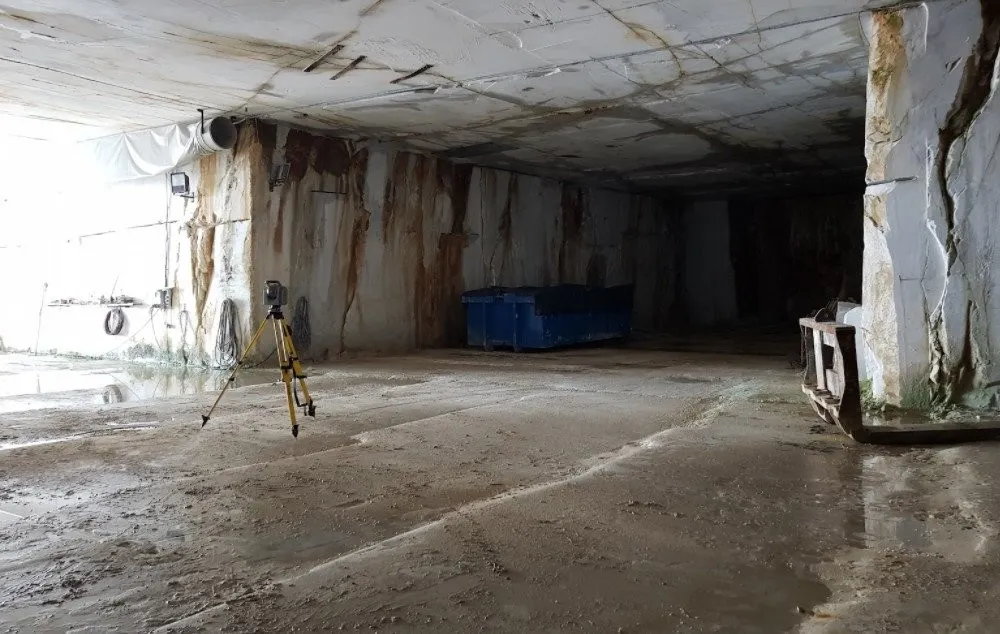
Water on the floor of a tunnel can bring a lot of noise into the point cloud of a laser scan.
Laser scanning is perhaps the most efficient way to survey the inside of a tunnel and get dense, continuous data (even if perhaps less precise than a total station).
But in tunnels under construction, exploratory adits or extraction areas, you often find water.
It can come from the works or seep out of the rock, and it collects in the irregularities of the floor.
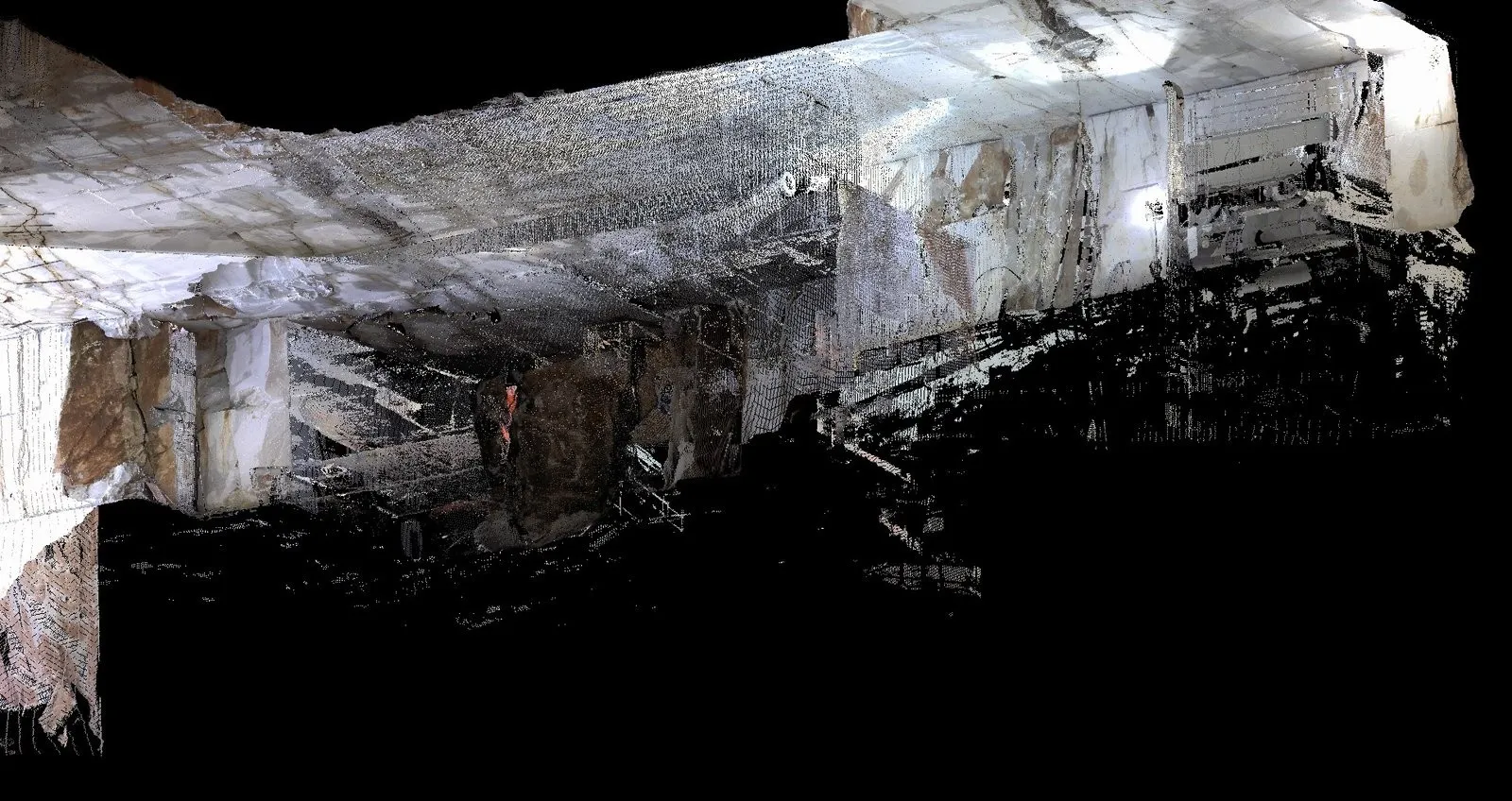
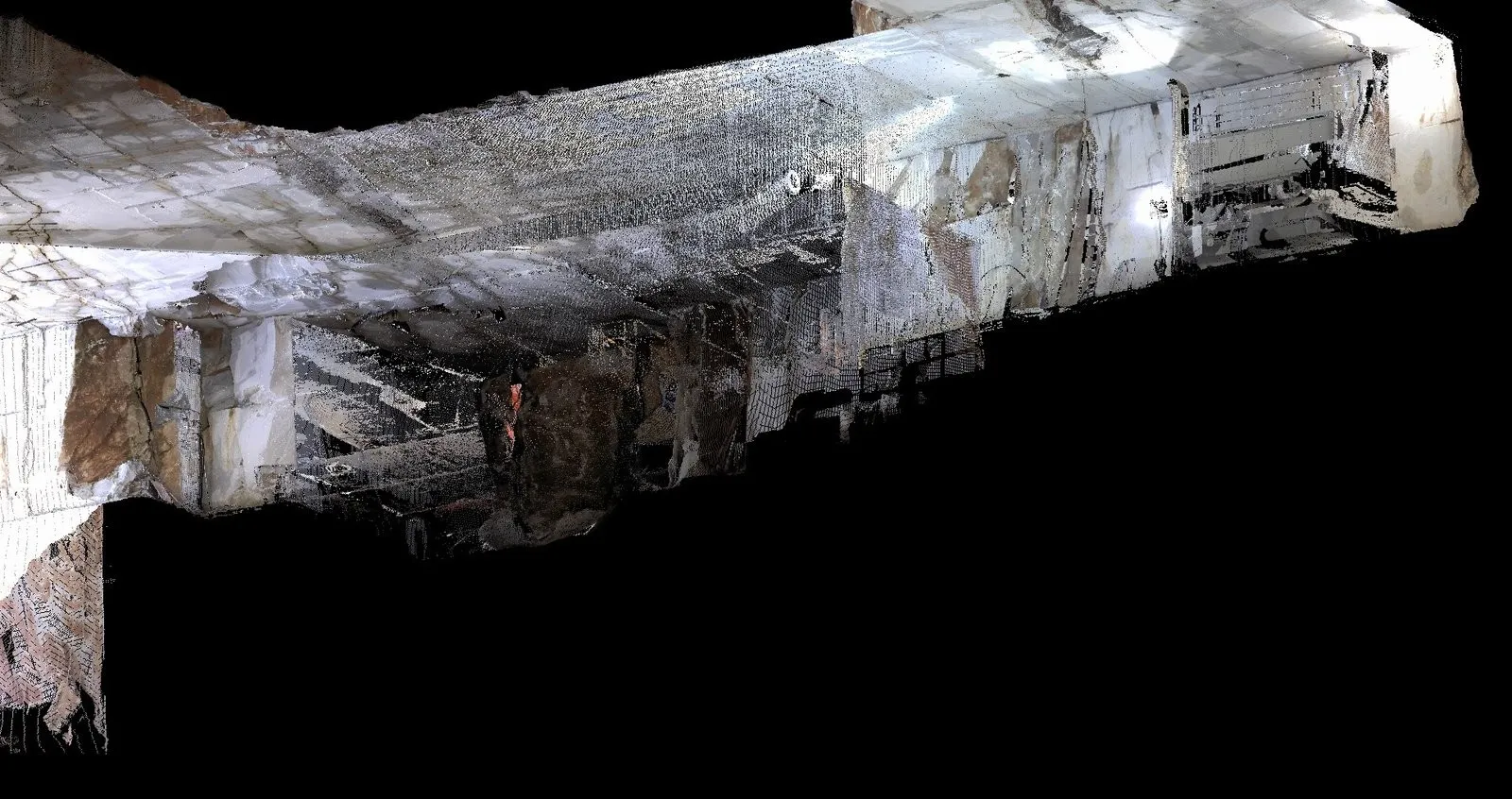
And if the scan sends the laser beam into these areas too, the final cloud is very likely to contain a lot of dirt, with points even in very unlikely parts of 3D space (underground, inside the mountain, …).
I can guess why it happens (I think it lies in the principle of laser measurement and in incidence, reflection and refraction on contact with water), but I won’t venture into explanations that may not hold up.
The fact is that you have to deal with the noise.
If your scanner allows it, limit the scan area when acquiring, so that the beams don’t hit the water.
If you can’t avoid it, be ready to step in afterwards and edit the point cloud (working on sections).
The more complex and “wet” the tunnel, the more time you will need.
Here are some “before and after” images of the cloud cleaning.
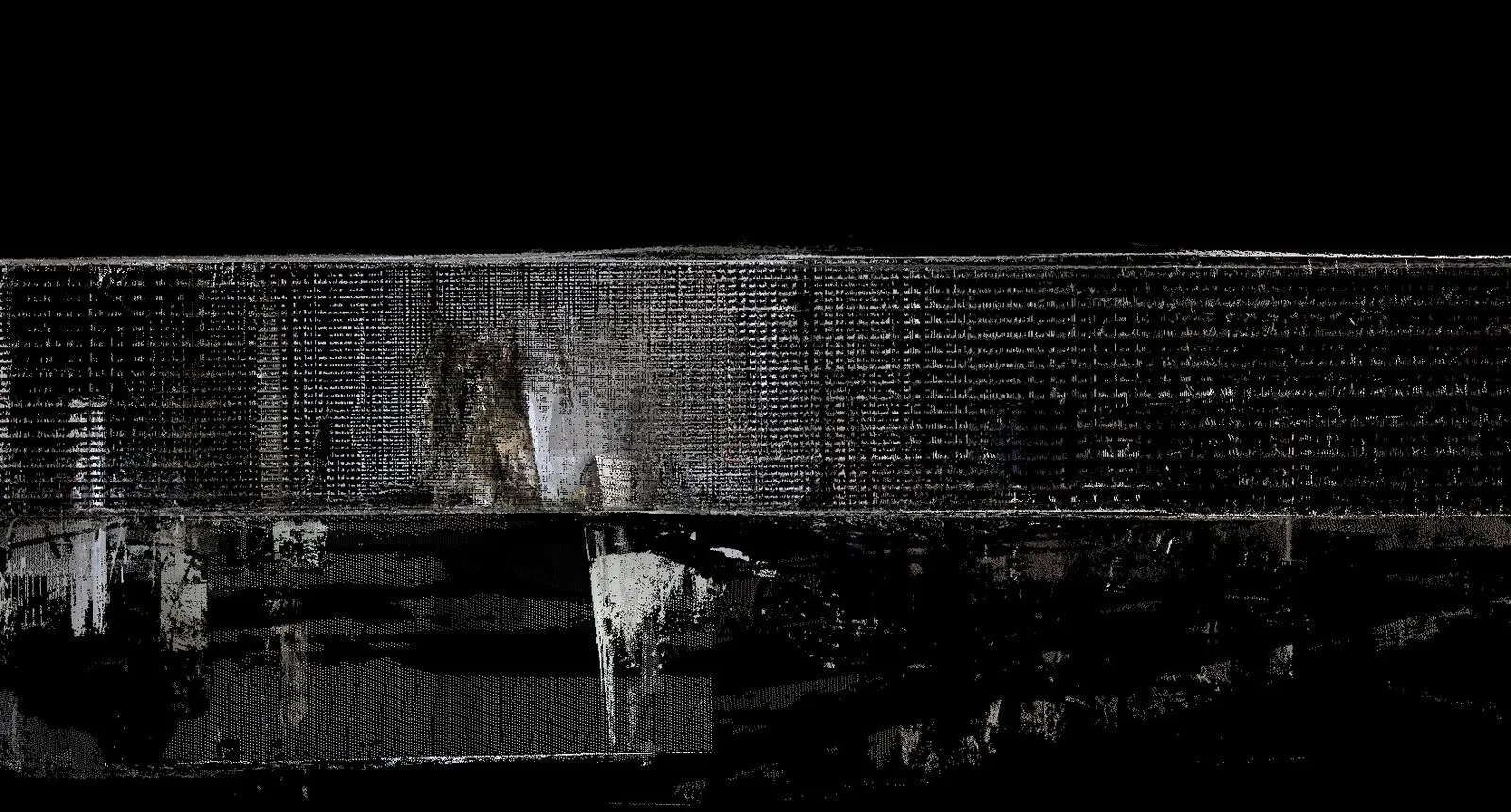
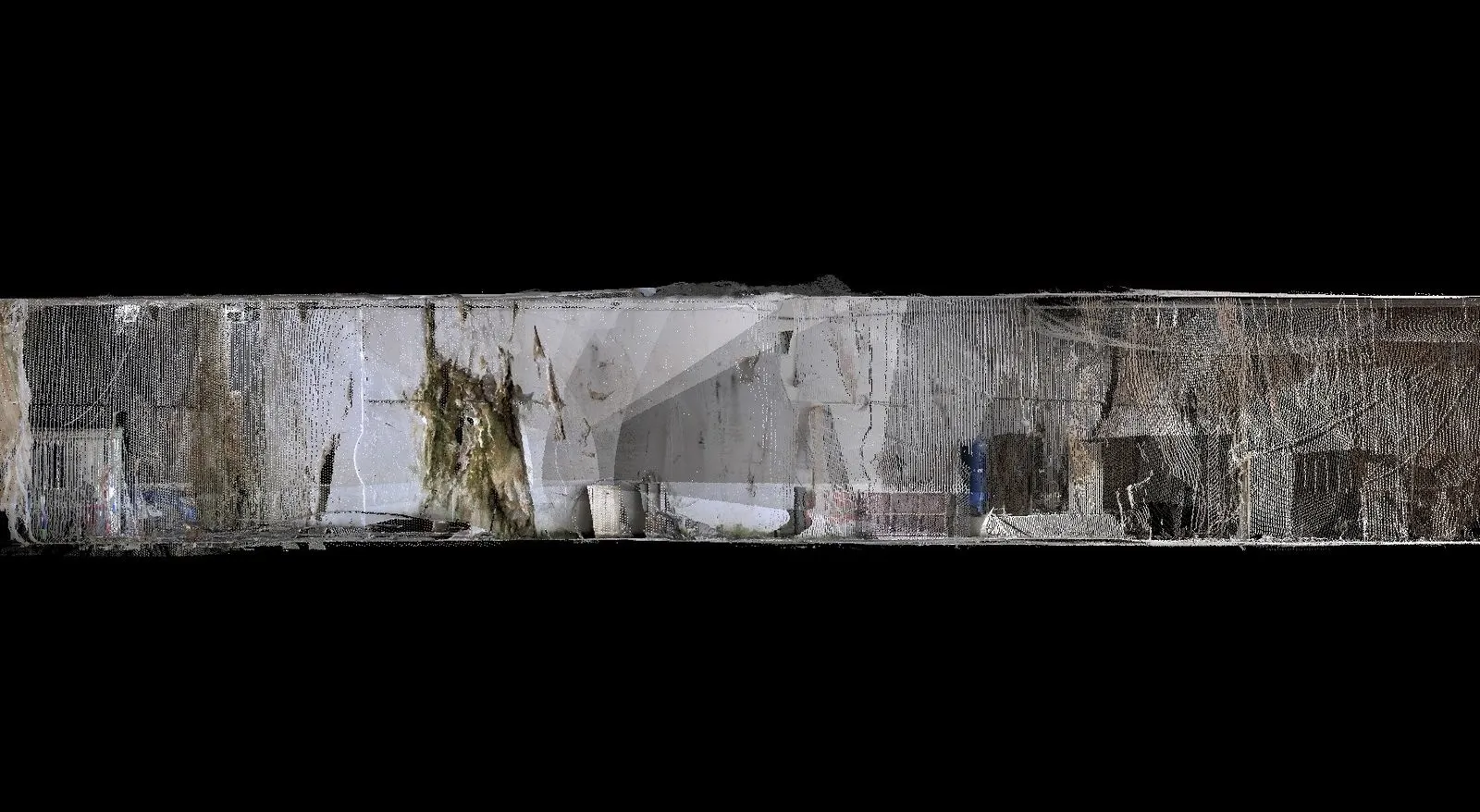
Working in summer, away from the rains, or when there are no machines using water to cut the rock (and practically all of them do), can be a way to work in slightly drier conditions.
But you can’t always wait for better times…
If you have been in similar situations and used a particular strategy, I’d be glad to hear about it.
The same goes for other “problems” you have had to deal with in tunnel surveys (dust, noise, interference, …).
P.S. If there is water on the floor and you need measurements of the pavement, there is no other way than to use a total station and shoot some points with the prism on the pole.