Photogrammetry and sensors
Same wall, two cameras: a small drone sensor and a full-frame mirrorless. How sensor size changes GSD and the detail of point cloud and mesh.
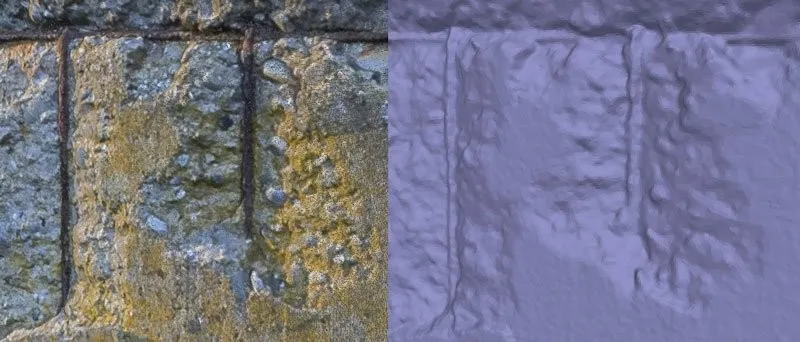
The main difference between using a camera with a “large” sensor and one with a smaller sensor, when capturing photos for Structure from Motion processing, is the output detail in the point cloud and, as a consequence, in the mesh.
A large sensor gives you a lower GSD, with the same lens and shooting distance.
Below I compare the outputs of the same element (a vertical wall) from two different photo datasets.
One was taken by a drone (DJI Mini 2, 1/2.3″ sensor, 12 Mpixel resolution and a 24mm lens in “35mm equivalent” format) at about 10 metres, the other by a full-frame mirrorless (Sony Alpha 7 II, 24 Mpixel) with a 50mm lens (the shooting distance was more or less the same).
In both cases I got comparable accuracies (quite tight, by the way, for this kind of reconstruction, thanks to the target measurements), but the difference in information between the 3D models (point cloud and mesh) is significant.
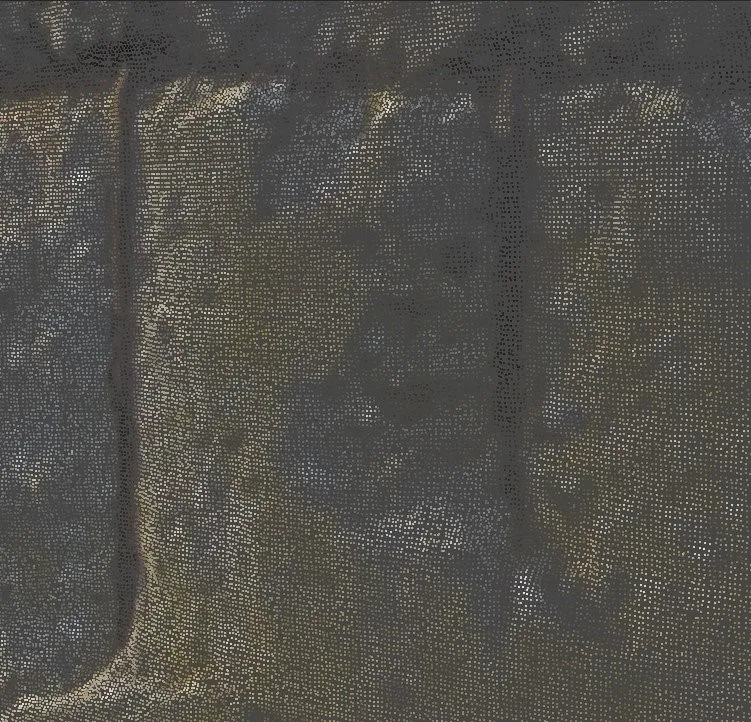
Point cloud from photogrammetric processing of DJI Mini 2 drone images
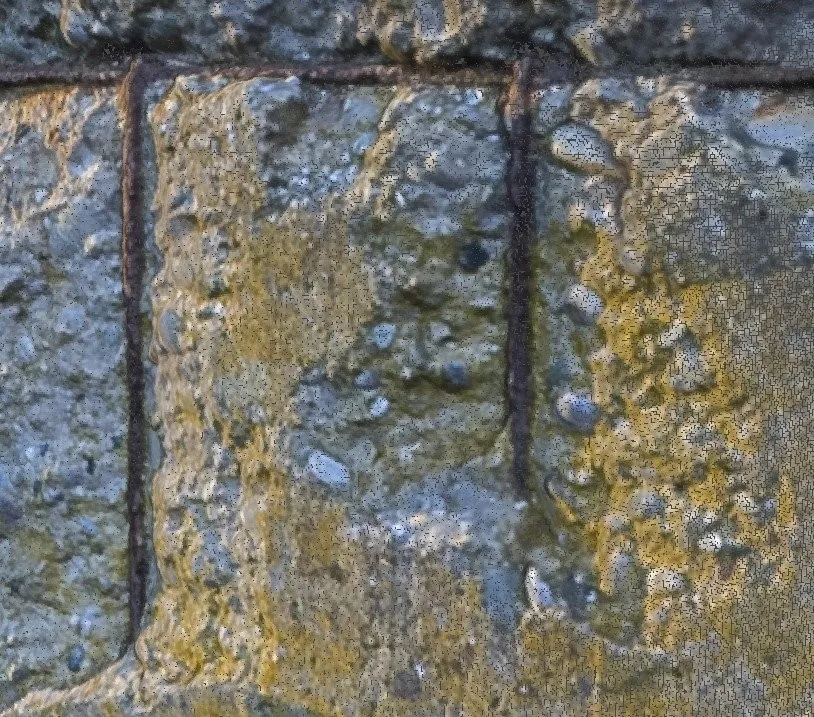
Point cloud from photogrammetric processing of Sony Alpha 7 II full-frame mirrorless + 50mm images
The Mini 2 dataset has a GSD (Ground Sampling Distance) three times larger than the terrestrial camera dataset.
It is no coincidence that the number of points in the dense clouds (for the same modelled surface) also follows (more or less) this 3:1 ratio.
If you have to reconstruct particularly complex elements, with details and fine finishes, moving to a better “sensor-lens” system can be almost a must.
With the same sensor, a longer lens (less wide-angle) gives the best results (but it takes more time in the field and more photos to process and archive!). Not to mention the texture!
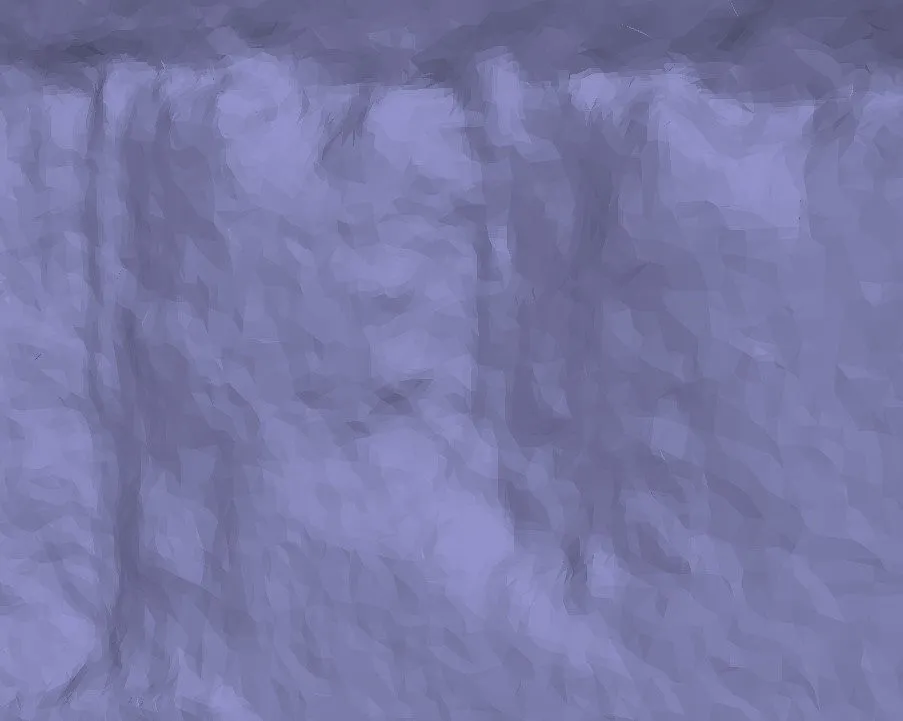
3D mesh from photogrammetric processing of DJI Mini 2 drone images
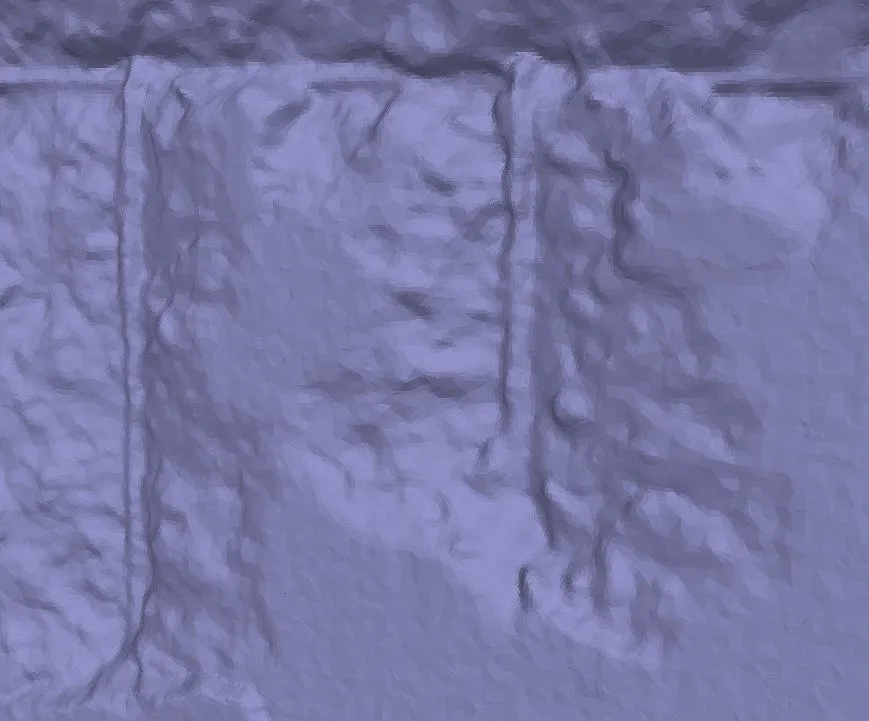
3D mesh from photogrammetric processing of Sony Alpha 7 II full-frame mirrorless + 50mm images