Laser scanners and shadows
Obstacles in a terrestrial laser scan cast shadows in the point cloud. Their size depends on distance from the scanner, and filling them costs extra stations.
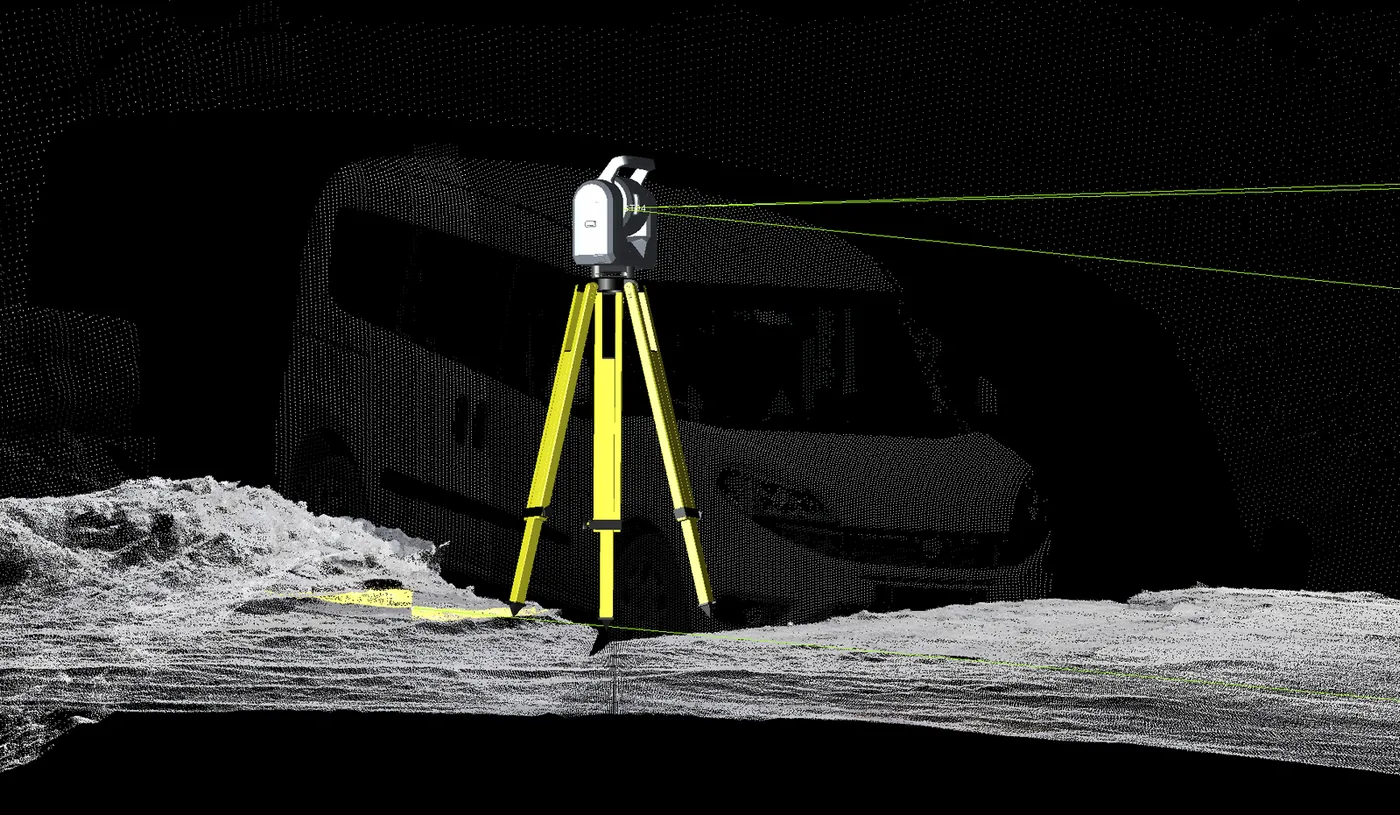
A laser scanner takes an active measurement, but the beams it emits don’t destroy the objects they meet on their way!
Some scanners can record several returns for the same beam, but if it hits a wall, a roof, a car or the ground, it can’t go any further.
And just as well!
That aside, in a terrestrial scan (TLS) there will very likely be obstacles that stop part of the beams and cast “shadows” in the point cloud.
There is no information there.
The shape and, above all, the distance of the obstacle from the emitter determine the size of the shadow.
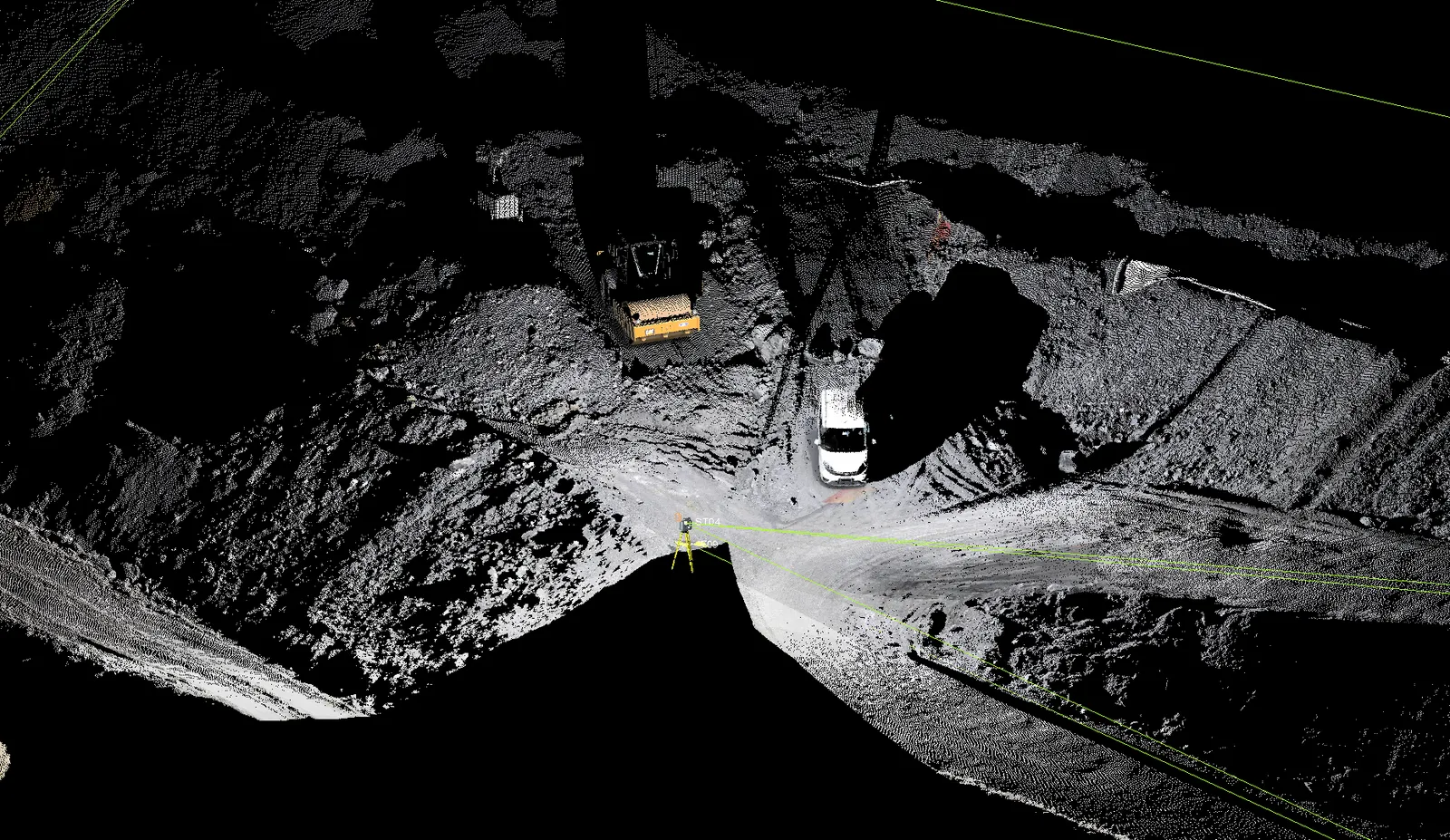
Even if an object seems unimportant compared with the scene to scan, its shadow could wipe out a lot of points which, translated into surface to survey, can amount to many square metres.
If you can’t get rid of the obstacle, the only way to fill the shadows is to take more scans from different positions, so the emitter can “see” beyond it.
Planning a laser scanning survey in the field takes this into account too.
More stations mean more time on site.
And with a scanner that works the surveying way, the extra scans weigh on the final budget of field hours!